BANKS
Banks need to hold forward looking capital buffers: RBI Dy Guv
Public sector banks must strengthen their capital buffers position and improve asset quality as they prepare for the future, said RBI Deputy Governor Swaminathan.



Public sector banks must strengthen their capital buffers position and improve asset quality as they prepare for the future, said RBI Deputy Governor Swaminathan.
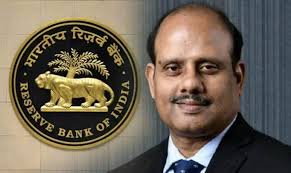
Public sector banks (PSBs) must strengthen their capital position and improve asset quality as they prepare for the future. Their capital buffers should go beyond minimum regulatory requirements, said Reserve Bank of India deputy governor Swaminathan J.
The gains PSBs have made over the past decade in improving their capital position must now be protected and deepened.
"Banks should hold forward looking capital buffers that reflect their risk profile and growth ambitions rather than simply complying with regulatory floors. Asset quality must also be managed with a preventive mindset, using early warning systems and predictive analytics to identify stress before it becomes a crisis," Swaminathan said while addressing the PSB Manthan 2025 conference, adding that banks cannot afford complacency at a time when global economic conditions remain uncertain.
True resilience today goes beyond capital and credit. "It also means operational resilience. With customers relying on banks for 24x7 digital access, even short disruptions can erode trust and create systemic impact," Swaminathan said.
Banks must therefore strengthen their technology infrastructure, cyber safeguards, vendor oversight and business continuity planning so that services remain secure and uninterrupted under every circumstance, he added.
The senior RBI official suggested that PSBs consider using shared technology platforms and jointly develop digital infrastructure to leverage economies of scale and reduce costs.
Swaminathan further said the boards of banks need sharper tools, such as real-time insights that flag emerging risks or customer concerns. As banks adopt artificial intelligence and data driven systems, assurance must also extend to these new domains.
"PSBs should consider shared technology platforms and joint development of digital infrastructure to leverage economies of scale, reduce costs, and ensure consistency in customer experience. They can also experiment with what is known as a digital twin, a virtual model that mirrors a real process such as the working of a branch or the journey of a customer applying for a loan," he said.
By testing changes on the digital twin first, banks can identify bottlenecks and improve efficiency before making changes in the real world, he added.
In his speech he used the banyan tree as a metaphor.
He emphasised that for PSBs, the task today is not only to provide shade and shelter to millions of households and enterprises but also to ensure that beneath their canopy, new growth flourishes in the form of abundant and affordable credit to MSMEs, startups, women entrepreneurs and rural enterprises.
"In that spirit, I find the banyan tree still a fitting metaphor for our PSBs. Its roots, trunk, aerial roots, branches and canopy together capture the five pillars on which PSBs can build their future.
"These five pillars in today's context are strong governance, financial resilience, innovation and adaptability, people and culture and an all inclusive customer-centricity," he said.
Swaminathan, who served at the State Bank of India (SBI) before moving to the RBI, recalled that when the SBI was established in 1955, its logo was a sprawling banyan tree. The choice was deliberate, for the banyan has long been revered as the tree of life. Its deep roots embody stability, its sturdy trunk represents resilience, and its wide canopy offers protection to all, he said.
In later years, however, the banyan tree logo was replaced by the now familiar blue circle with a keyhole, designed by the National Institute of Design.
While the banyan conveyed strength and shade, it also drew criticism for casting such a dense canopy that little else could grow beneath it, which seemed at odds with the image of a modern and accessible bank, Swaminathan said.