The Reserve Bank of India’s proposed liberal reforms are aimed at building a supportive environment for moving the Indian economy to where Prime Minister Narendra Modi wants it to land: a creation centre for bigger corporates, mega banks, internationalisation of the rupee and a bullish stock market.
The RBI has changed its risk stance on what it earlier considered as two red flags: Indian banks funding mergers & acquisitions (M&As) and Rs 10,000 crore cap on individual corporate exposure. The easing on both these fronts will provide fertile ground for large corporates to grow bigger across sectors.
The RBI’s decision to allow Indian banks to finance corporate takeovers is set to heighten M&A activity. As ‘acquisition loans’ get cheaper, more deals are expected to be brought to the table and consumed. The big corporates are already showing an appetite to consolidate sectors and gain market share.
In recent years, consolidation has swept some sectors such as cement, pharma, banking, power, manufacturing, startups and media & entertainment (M&E). During these earlier rounds, corporates had to rely on non-banking financial companies (NBFCs), foreign banks, private equity and bond issues as the regulator had shut the door for Indian banks to fund M&As due to fears of speculative exposure to overvalued deals and risks involved in reckless buying.
For the next bouts of consolidation, Indian banks hope to play a major financing role. Freeing the restrictions for domestic banks would go to support large-ticket M&As in India. Analysts say funding M&A deals would become relatively cheaper for corporates as they don’t have to limit their options to offshore debt, NBFCs or private credit.
In the cement industry, the buying frenzy led by the Adani and Aditya Birla groups is expected to continue as they compete for market dominance. According to Moody’s Ratings, India’s top 10 cement producers have acquired over the last five years around 140 million metric tonnes per annum (MMTPA) capacity from smaller players, valued at around Rs 89,000 crore ($10.5 billion).
"Large companies with a pan-India presence such as UltraTech (Birla) and Ambuja (Adani) will continue to engage in M&A to acquire smaller regional producers with weaker capacity utilisation and lower profitability. Ongoing industry consolidation combined with steady demand growth will keep capacity utilisation stable for the incumbents," it said in a report.
In the Indian pharmaceutical industry, around 29 deals worth $4.1 billion were stitched in 2024 and the deal activity has continued in 2025. This is set to intensify as pharma companies seek to control supply chains, increase market share and build the future through M&A.
In the M&E sector, a mega merger of The Walt Disney Co.’s India operations with Reliance Industries’ media businesses took place in 2024, combining their television and digital assets to snap up a commanding viewership share in entertainment and sports content.
The new entity, named JioStar, has a formidable presence as it has brought together channels of erstwhile Star India (such as Star Plus, Star Gold, Star Sports), Viacom18 (such as Colors, MTV India and Nickelodeon) and Disney while the digital streaming business includes Hotstar, Disney and JioCinema. Prior to this behemoth formation, a consolidation of some might had taken place in 2019 when Star India’s businesses came under the fold of Disney following the US giant’s $71.3 billion global buyout of Rupert Murdoch’s 21st Century Fox.
After such a comprehensive consolidation and placement of a definitive market leader in the sector, the other two big players have little option but to grow the inorganic way. The Sony-ZEE consolidation talks had made some progress but got thwarted. The Adani Group, which has entered the TV media space, will also need to acquire an entertainment outfit to make any deep impact.
There are no other TV entertainment companies of any size and Kalanithi Maran’s Sun TV Network remains content staying as a strong regional player in the southern region. The OTT and production companies are much in the fringe at this stage and will keep focus on rapid, organic growth before they lay plans on cross-media acquisitions.
In the banking sector, the government has a plan to have two public sector banks (PSBs) wing their way to the top 20 in the global hierarchy. Currently, State Bank of India (SBI) ranks 43rd in asset size while private lender HDFC Bank figures among the top 100 list of global banks.
The process for a new wave of consolidation is expected to resume next year, with smaller PSBs like Punjab & Sind Bank, UCO Bank, Bank of Maharashtra, Indian Overseas Bank and Central Bank of India being likely targets. The last consolidation drive happened in 2019-2020, reducing the number of PSBs to 12 from 27 in 2017 (merger of SBI subsidiaries took place in 2017). Among the 12, seven are large PSBs including SBI, Punjab National Bank, Bank of Baroda, Canara Bank, Union Bank of India, Bank of India and Indian Bank.
The thinking in the government is that bigger banks can support larger ticket-size lending, run with more operational efficiency and absorb higher risk-taking ability.
Another major shift in direction is RBI’s decision to scrap the Rs 10,000 crore cap on bank loans to individual corporate entities. Originally meant to prevent concentration risk and drive corporates to diversify funding sources, the RBI now feels that the banking system and corporate balance sheets have become more resilient since the 2016 guidelines were introduced.
“Circumstances change, times change, requirements change and so nothing should be frozen in time,” RBI Governor Sanjay Malhotra said in the October post-policy conference. “The share of corporates in overall banking system exposure has come down by over 10%, so the risks are not so many. That’s the primary reason we have proposed to remove this framework. We will ensure that wherever prudential measures are required, they are not compromised.”
At the individual bank level, concentration risks will continue to be addressed under the existing Large Exposure Framework, which caps a single bank’s exposure to one borrower at 20% of its Tier-I capital. At the banking system level, the RBI will manage the issue through macroprudential tools when needed.
Removing the Rs 10,000-crore cap will give corporate bank credit a boost, accompanied by some risk elements. Large corporates will be free to tap substantial loans from domestic banks for funding big projects, capital expenditure and M&As. This may turn out to be a cheaper option than relying on funding from other sources like NBFCs or corporate bonds.
According to market estimates, the RBI’s two proposed liberal reforms have the potential to let loose Rs 5.5 lakh crore of incremental credit demand. While M&A deals could lead to fresh bank credit demand of Rs 1.2 lakh crore, SBI’s economic research wing has estimated Rs 3-4.5 lakh crore as the additional potential banks can get to lend towards meeting corporate demands after the RBI removes the Rs 10,000-crore ceiling.
As big capital moves towards large corporates for funding takeovers and expansion programmes, bank credit flow is set to augment. An ecosystem is being built for large banks and large corporates to grow bigger as the thinking is that it will be healthy for the economy, which has the ambition of being the third-largest in the world.
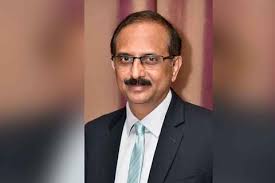
The heads of two big banks have recently stated their goals of playing a substantial role in acquisition financing at an event held in Mumbai. SBI chairman CS Setty has expressed confidence that the bank is ready with the models as it has already been doing outbound M&A financing for Indian corporates to acquire overseas entities. “Banks like SBI are well-versed in acquisition financing. We are ready to support domestic acquisitions,” the head of the country’s largest bank told reporters on the sidelines of the Global Fintech Fest 2025.
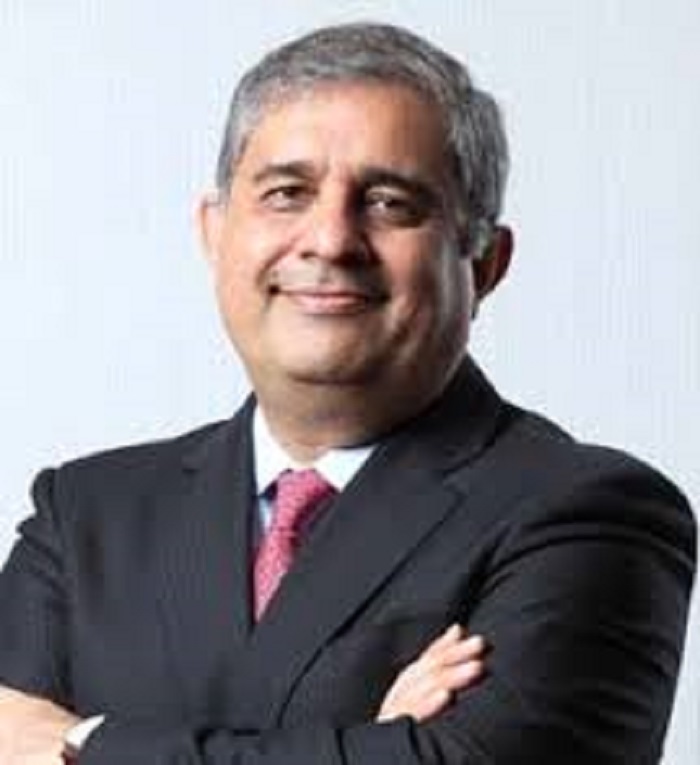
Axis Bank, India’s third-largest private sector bank, is also planning to bet big on M&A financing and nurses the ambition of racing ahead of foreign banks in this space. “We are the biggest players in bond and loan syndication. We will give all foreign banks, which have been financing these acquisitions for the last several years, a run for their money, ” said Axis Bank managing director and CEO Amitabh Chaudhry.
Along with the measures to gradually globalise the Indian rupee and increase bank credit flow to boost capital market activity, the RBI’s reforms mark a turning point. The rupee is put on a global journey to reduce the dominance of the dollar, with the initial task of deepening its presence in the region’s neighbouring economies.
The stock market is provided support to maintain its growth momentum by increasing the limit on lending against shares (to Rs 1 crore from earlier Rs 20 lakh) and financing for IPOs (to Rs 25 lakh from earlier Rs 10 lakh per investor). The RBI also proposes to remove the ceiling on lending against listed debt securities.
Bigger companies can plan their growth paths through M&A deals, new projects and expansion programmes with bank funding in mind. The tone is set when Chaudhry said Axis Bank “wants to bank with all the major corporates in India”.
On the flip side, the old vice of bad loans can appear. There is also the risk of large corporates dwarfing the rest of the market. Besides, it is important that senior executives in public sector banks be weighed by their performances in not just profit growth but also in social banking and fair debt distribution to smaller and newer entrepreneurs.
The RBI is of the view that the Indian economy, companies and banks have grown to a certain size that risks can be managed through macroprudential tools when the need arises rather than through rigid, broad policy restrictions. The new reform measures are taken with this philosophy in perspective.
There is a feeling in the government and among several economists that companies and banks will be better off if they grow bigger. It is an environment where scale makes a difference.