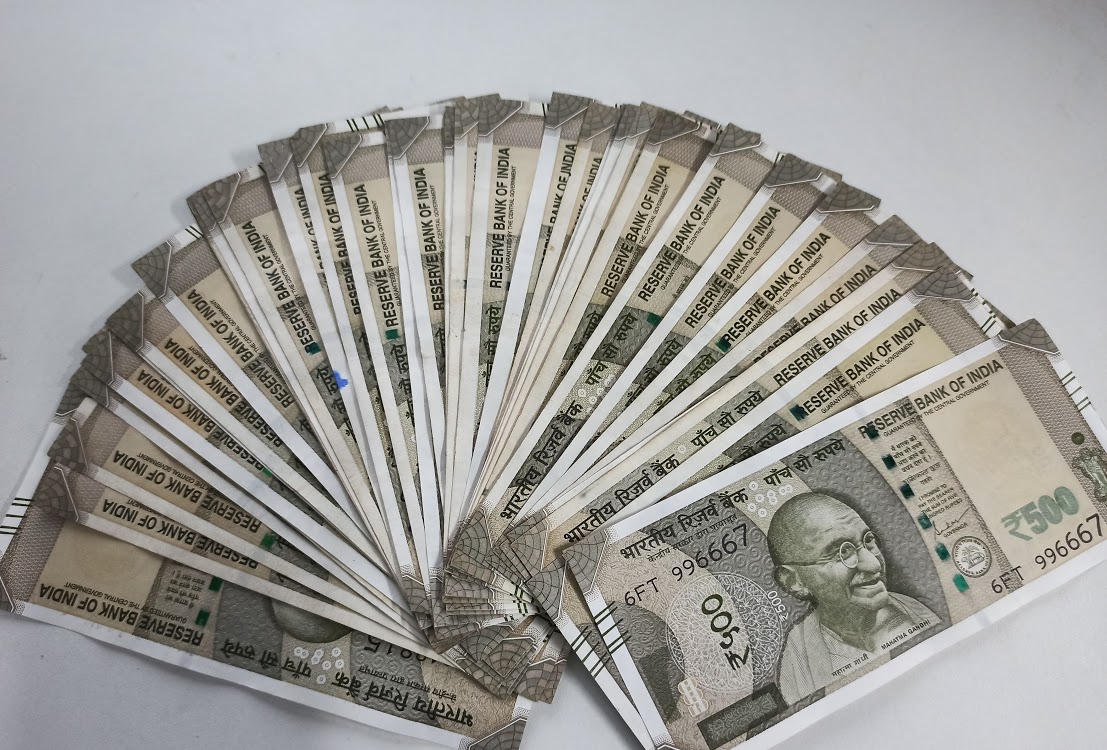
Reserve Bank of India Governor Sanjay Malhotra has entered the New year with the belief that inflation will continue to be in a good place, interest rates will remain low and the Indian economy’s goldilocks period will last in 2026.
A wobbly rupee, persistent foreign fund outflows and the absence of a US-India trade deal could still disturb. Foreign investors may continue to withdraw from Indian equities, after having pulled out around $18 billion in 2025. The Indian currency, which breached the 90-per-dollar mark for the first time and dived to a lifetime low of 91.07 in December, could further fall in 2026. And there is no indication yet that President Donald Trump and Prime Minister Narendra Modi are nearing a trade settlement.
Malhotra, however, is getting ready for another low-interest year. Despite global headwinds, he does not feel at this stage that India’s story of low inflation and strong growth would be upset in 2026. As he had said earlier, interest rates are expected to remain low for a “long period of time” as inflation remains benign.
The RBI’s monetary policy committee (MPC), led by Malhotra, is broadly expected to continue the downward interest-rate cycle this year. An interest rate cut by 25 basis points could come anytime in 2026 and another could follow if conditions are favourable, making borrowing cheaper to propel growth. If the MPC manages to slip the second one in, it is most likely that it would be the terminal rate and a long pause would follow.
This would mean that the repo rate would first fall to 5% and, in case the second cut happens in 2026, to a possible 4.75%. The rate cut last year was bigger, dropping by 125 basis points to 5.25%. With inflation hovering at below the RBI’s ideal target of 2%, Malhotra, along with the MPC members, could find policy space to aggressively move interest rates down.
That steep a cut is not possible this year. Inflation is expected to inch up and growth to soften from the blistering pace reported in the second quarter of FY26. The RBI forecasts GDP growth rate at 6.7% for the first half of FY27. Even at this speed, India will remain the world’s fastest-growing major economy.
Malhotra likes to call the current period, achieved after a series of rate cuts since February last year, as a “Goldilocks” phase of Indian economy. During his first year as RBI boss, there are two figures that he can proudly look at: inflation at a record low of 0.25% in October and GDP at 8.2% in the July-September quarter, the fastest in the last six quarters.
Much of the groundwork for taming inflation was done by his predecessor, Shaktikanta Das. That made it easier for Malhotra to kickstart the rate-cut cycle from his first monetary policy itself. Then followed a similar 25 basis-point repo cut, with promise of more to follow even as the economy was cushioned by a cooling inflation.
Malhotra’s bold bet came in his third policy meet, signalling his clear plan to drive down interest rates to bolster economic growth. The MPC decided on a larger-than-expected 50 basis-point rate cut in June, pushing down the key repo rate by 100 basis points since February to 5.50%.
In an earlier post-policy briefing, Malhotra stated that India would like to achieve 7-8% growth. The growth bump up would be aided by additional rate cuts in 2026. But the rate cut support, analysts say, could perhaps get exhausted by the end of next fiscal.
According to a report by Bernstein, it is highly likely that this year would see the end of the rate cut cycle, both in the US as well as India. “We believe it’s likely that the rate cuts are done and dusted in this year and there are weak, but sufficient inflationary pressures from tariffs and other policy uncertainties to prevent a continued downward trajectory,” it said.
Several measures were undertaken in 2025 to stimulate consumption demand and accelerate growth, including tax and GST (goods and services tax) cuts. While some analysts say this could be the springboard for intense economic activities in 2026, others believe the impact of these drives would fade and things would quieten out due to structural issues.
“It’s the year that promises many things: few rate cuts, a slight return of private capex, and a tentative trade deal - but we believe these little bits of everything do not carry enough momentum to keep the India story at heights we’ve been used to seeing,” said Bernstein in its report.
That may be an extreme view to hold as India, while having many drags, has bright spots in the economy. The swing factor, however, will depend on whether the US-India trade deal gets concluded or remains mired in contentious issues such as agriculture, dairy and even seafood.
From a growth perspective, it will also be important for the Indian economy to reverse from a year of mute foreign flows. The rupee’s value against the dollar will be determined by foreign fund outflows and the US-India trade deal, with the RBI defending the Indian currency from having a free fall by intervening in the market from time to time.
In another area, Malhotra has set the tone for foreign capital to flow into Indian banks. By taking an open approach, the RBI has approved Sumitomo Mitsui Banking Corporation (SMBC) and Emirates NBD to acquire substantial stakes in Yes Bank and RBL Bank, respectively. More such deals are anticipated in 2026, enabling domestic banks to be financially stronger.
Malhotra’s gardening work last year also sought for the progressive growth of mega banks and corporates as India shapes to have an economy where size matters. By allowing domestic banks to finance corporate acquisitions and freeing the Rs 10,000 crore cap on individual corporate exposure, the RBI has left fertile ground for lenders and large corporates to grow bigger in 2026.