BANKS
SBI chairman on tariffs, corporate loan growth, NIM
Impact of US tariffs on Indian banking sector will be limited, says SBI chairman CS Setty; bank will achieve its growth targets for FY26 despite global uncertainties.



Impact of US tariffs on Indian banking sector will be limited, says SBI chairman CS Setty; bank will achieve its growth targets for FY26 despite global uncertainties.
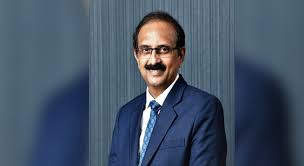
The impact of US tariffs on the Indian banking sector will be limited and State Bank of India (SBI) will be able to achieve its growth targets for the current fiscal despite global uncertainties, the state-owned lender’s chairman CS Setty said.
There are 4-5 sectors which will probably have more impact at a direct level but banks do not have large exposures on them, he elaborated. “Definitely, for SBI, very, very minor exposure on these sectors,” he assured.
The worry, according to him, is more on the uncertainty surrounding the tariffs as it can delay investment decisions and spiral trade disruptions.
“Our assessment is that while the direct impact on these sectors may be limited, the sooner the issue of tariffs related negotiations gets resolved the better. I am sure the government is working on that,” Setty said.
The two governments are expected to meet to start negotiations. President Donald Trump has imposed 50% tariff on Indian goods exported to the US. There is also the threat of secondary sanctions against India for buying Russian oil.
Textiles, leather, chemicals, gems & jewellery and shrimp are some of the sectors which will feel the impact of tariffs, but India has a wider products plate for exports.
“Indian exports are broad-based, both in terms of basket of offerings and geographies they travel to,” Setty said during the post-earnings press conference.
The slow growth in corporate loans during the first quarter of the current fiscal could be a matter of concern, but Setty expresses confidence that the country’s largest lender would post 10-11% growth in this segment for the full-fiscal. In the first quarter ended June, SBI’s corporate loan book grew much below its target at 5.70% to touch Rs 12.03 lakh crore, up from Rs 11.39 lakh crore a year ago.
Setty’s comfort, however, comes from a loan pipeline of Rs 7 lakh crore, equally split between proposals and sanctions but not disbursed. Demand is coming from infrastructure and power projects, including renewable and thermal. In the real estate sector, there is interest shown in commercial, premium residential and slum redevelopment projects in Mumbai.
“We will be able to get back to a double-digit corporate credit growth next quarter onwards,” the SBI chairman said, while admitting that disbursements are taking time.
Banks for several quarters have seen muted growth in corporate loans as companies sitting on cash have deleveraged their balance sheets by prepaying loans. Companies also the good option to tap the market while several have delayed capital expenditure in wait of consumption pickup.
“There is some shift towards market instruments. We have seen that utilisation of working capital limits, which was 62% in Q1 of FY25, has come down to 58% now. We have also seen that some large corporates are accessing the commercial paper (CP) market to replace working capital,” Setty said.
A dip in interest rates have made CPs an attractive option for corporates. For the June quarter, CP issuance by corporates has seen a nearly 20% rise to Rs 4.54 lakh crore from Rs 3.81 lakh crore a year ago.
Setty said the CP market has seen a diversified participation from banks and mutual funds. “These keep happening but once rates stabilise on the bank side, they will come back to bank credit,” he added.
In a declining interest-rate cycle, SBI had around Rs 12,000 crore of loan prepayments by corporates in the June quarter. There has also been a movement of around Rs 16,000-18,000 crore towards the CP market by the corporates, according to Setty.
SBI expects to achieve its credit growth guidance of 12% for the full-fiscal. In the quarter ended June, the bank reported a 11.61% year-on-year rise in gross advances to Rs 42.55 lakh crore. The retail personal loan book grew 12.56% to Rs 15.40 lakh crore, of which home loans stood at 8.51 lakh crore, up 15.05%.
While retail loan growth has been robust, the only soft spot has been Xpress Credit. But the bank expects to do well in this segment as well, with a bounce back coming from the current quarter. The portfolio is at Rs 3.5 lakh crore.
Auto and unsecured personal loans should also pick up in the second half of the fiscal, Setty said.
On the deposit front, the bank is on course to maintain its deposit growth guidance of 10% in FY26.
Setty is also confident that the earlier FY26 guidance on net interest margin (NIM) at 3% would be met, despite interest rates falling. In the fiscal first quarter ended June, NIM declined by 33 basis points to 3.02% compared to 3.35% a year ago. Sequentially, it was at 3.15%, down by 13 basis points.
“I think the NIM trajectory will be U-shaped. It probably will come down in Q2, but will improve from then on. The terminal Q4 NIM should come back to where we left FY25 with,” Setty said.
There are three reasons why the NIM could follow this trend. The bank’s deposit book will get repriced, both on the savings account side and more so on the fixed deposits front. Secondly, the cash reserve ratio (CRR) cut will release around Rs 52,000 crore, which is currently sitting idle and earning nothing.
The third supportive factor is that the interest rates are stabilising on the retail loan side with the Reserve Bank of India (RBI) keeping the repo rate unchanged in its August policy, after cutting it thrice since February to bring it down by 100 basis points to 5.5%.
SBI ended the June quarter with a market share of 22.17% in domestic deposits and 19.24% in system-wide advances, said Setty. The bank added 14 basis points of incremental loan market share year-on-year, led primarily by high return on risk weighted asset segments such as retail mortgages and secured small business credit.