



Lifting Punjab National Bank’s total business from nearly Rs 28 lakh crore to Rs 37 lakh crore by March 2028. Playing a leading role in financing mergers and acquisitions (M&As). Exercising flexibility to fund large, creditworthy corporates and infrastructure projects. Fixing the retail, agriculture and MSME (RAM) portfolio at 60% of the total loan mix from its current ratio of almost 57%.
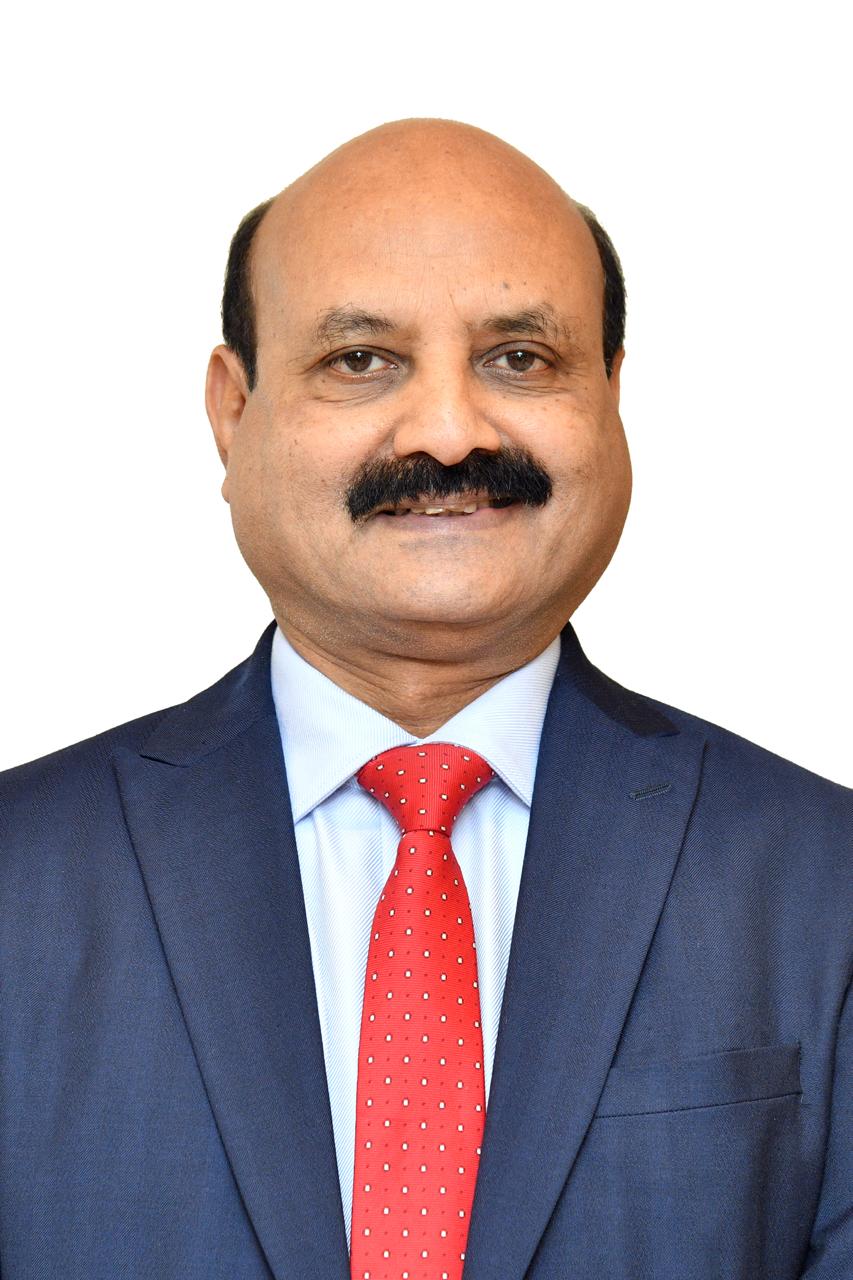
These are some of the targets Ashok Chandra, PNB’s managing director and CEO, has set out to achieve as he recharges the team.
In an interview with Indianbankingnews.com Editor Manju AB, Chandra also talks about how the financing landscape is set to change in India following the Reserve Bank of India’s (RBI) easing of credit norms.
Chandra explains how the picking up of substantial stakes by foreign banks in two mid-sized private lenders is set to further strengthen the Indian banking sector’s resilience and global appeal.
Edited Excerpts:
The RBI has allowed banks to fund M&A deals by Indian companies. How big is this opportunity and what difference will it make to the banking sector?
The RBI's decision to allow banks to finance acquisitions by Indian companies opens up a sizeable market opportunity for domestic banks, potentially reshaping India's M&A financing landscape. Previously dominated by foreign lenders, private credit funds and non-bank financial institutions, the entry of banks is expected to increase the availability of affordable capital, lower financing costs and deepen liquidity in the domestic acquisition finance market.
In FY 2024–25, India saw M&A transactions valued at approximately Rs 8.30 lakh crore. With roughly 40% typically funded through debt, that translates to nearly Rs 3.3 lakh crore. Since this was earlier not permitted by RBI, we did not have any policy in this regard.
Large corporates with expansion or consolidation plans are expected to approach banks for competitively priced acquisition finance, potentially expanding the corporate loan book substantially.
However, this also necessitates robust credit appraisal, valuation diligence and exposure monitoring frameworks, as M&A-related lending carries elevated integration and leverage risks.
How are you planning to go about in financing M&A deals?
Given the scale of opportunities, collaboration among 2–3 major banks can help us capture a meaningful share, and PNB is well-positioned to play a leading role.
Large banks, possibly in coordination through IBA (Indian Banks’ Association), are already exploring collective strategies to participate in this space.
Under M&A deals, banks can offer facilities like equity financing, bridge loan and other advisory services including deal origination, valuation, due diligence and negotiation support.
By understanding regulatory compliance and risk management aspects, banks can effectively finance M&A deals and support corporate growth.
Are you happy with the conditions RBI has prescribed for banks funding M&As or you want some changes to be done?
The RBI’s move is expected to increase competition, lower financing costs and facilitate more transactions.
At present, the conditions prescribed by RBI seem appropriate, as they empower banks to support India Incs’ expansion and consolidation efforts, while ensuring risks are managed within defined parameters.
The eligibility criteria, valuation requirements and risk containment mechanisms are in line with global best practices and are necessary to maintain credit quality as M&A activity scales up.

The RBI has also lifted the Rs 10,000 crore exposure to individual corporates. Was this ceiling a suffocation felt by banks and who will immediately benefit from this?
The RBI’s withdrawal of the system-wide lending cap gives strong public sector banks greater flexibility to fund large, creditworthy corporates and infrastructure projects. It removes earlier constraints such as syndication or reliance on non-bank sources, reflecting the RBI’s trust in banks’ improved risk management and the Large Exposure Framework (which was introduced earlier to limit bank’s total exposure to a single borrower).
Banks can now optimise portfolios, price credit more competitively and support faster project execution. This move is expected to boost investment in key sectors like infrastructure, energy and manufacturing while promoting sustainable credit growth and stronger corporate partnership.
With this, the overall credit growth in the economy will get a boost, supporting government initiatives such as “Make in India” and “Viksit Bharat 2047”.
While the system-wide cap is removed, the Large Exposure Framework at the individual bank level remains in place, capping exposure to 20% of a bank’s Tier 1 capital for a single borrower to control concentration risk.
In essence, lifting the Rs 10,000 crore ceiling removes a major bottleneck for banks and large corporates alike, enabling higher, more flexible credit deployment to support large-scale investments and economic growth while maintaining prudent risk controls.
You had earlier said that PNB’s ideal loan mix would be to get the RAM segment settle at 60% ratio. Will this ratio now change as banks see a bigger opportunity in corporate financing due the RBI’s new credit reforms?
PNB’s goal to have the RAM segment constitute 60% of our loan mix remains firmly on track. The recent RBI reforms that expand corporate financing options do not alter this strategic priority but rather complement it.
The landmark GST reform announced by the Government of India, applicable with effect from 22 September, is going to accelerate the demand for credit from the RAM segment, which we are ready to tap.
Our focus continues on inclusive growth by deepening credit penetration in underbanked sectors while responsibly scaling corporate credit wherever viable. The RBI’s easing of corporate credit norms will enable us to support key industry growth and acquisition financing without compromising our commitment to balanced portfolio diversification.
Both the RAM segment and corporate lending will coexist as pillars of sustainable business expansion, helping the bank deliver broad-based economic benefits.
The reforms actually enhance our ability to address diverse client needs without reshaping our foundational growth objectives.
Even as big banks are poised to tap corporates due to easing of credit norms, two mid-sized private banks have got foreign banks invest in them. How will the Yes Bank-Sumitomo Mitsui Banking Corporation and RBL-Emirates NBD deals impact the sector?
India’s banking sector is witnessing renewed global confidence, driven by high profitability, improved asset quality and a strong capital base. We are now among the world’s fastest-growing financial markets, supported by robust credit demand and steady economic growth.
The RBI’s pragmatic stance on foreign participation has made the sector more accessible, attracting long-term global investors. Recent investments by foreign banks in India’s mid-sized private lenders bring not only stable capital but also advanced risk management, technology and governance standards—further strengthening the sector’s resilience and global appeal.
Will mid-sized Indian public sector banks be impacted and what do you see the path ahead for them?
Foreign investment brings not just capital but global banking expertise, technology and governance standards to mid-sized private banks, intensifying competition in areas like retail banking, corporate lending, wealth management and digital services. This raises the bar for mid-sized public sector banks (PSBs) to enhance their offerings and customer experience.
The mid-sized Indian public sector banks are performing well and they could also explore avenues for foreign investment or increased private participation in non-controlling stakes to boost capital and governance standards, aligned with government reforms to modernise them.
While foreign investment in mid-sized private banks increases competitive challenges for mid-sized PSBs, the latter's path forward lies in consolidation, capital and governance strengthening, regional and niche focus, and rapid technology adoption to thrive in an increasingly sophisticated and competitive banking environment.
You are keen to take PNB’s total business to the Rs 30 lakh crore milestone very soon. When do you see this happening?
We are confident to cross the business size of Rs 30 lakh crore in the first half of FY’27 and more than Rs 33 lakh crore by the end of FY’27, with deposits at around Rs 19 lakh crore and advances around Rs 14 lakh crore.
The bank has been taking various steps towards achieving this goal. We are focusing on digitalisation, revamping products and services and organising outreach programmes for RAM advances.
A strong digital push includes new DIY journeys, innovative schemes and increased adoption. The bank has easy and customer friendly digital lending processes for products like PAPL (pre-approved personal loan), Home loan, Vehicle loan and Education loan to ensure faster and smoother customer onboarding. Digitalisation of more retail products like Home Loan Top up and two-wheeler loans are in the pipeline.
The bank has a dedicated PNB Loan Point structure to support the branches for retail loans. Alongside, the bank has a dedicated team at Customer Acquisition Centres for sourcing retail loan leads.
I believe that with a focus on accelerating digitisation, customer-centric products, reducing turnaround time and increased transaction volumes, we are well poised to achieve the set targets.
Where do you see PNB’s business size in the next three years?
We expect the bank’s total business to cross Rs 37 lakh crore by March 2028. With the kind of pace we are growing at and the expected economic growth during this period, we are confident that we will meet our target.
In order to achieve this, the bank is extensively working on the key enablers like customer centric product development, motivated workforce, reducing turnaround time for loan sanctioning, expanding digital offerings particularly under RAM segment, tying up and collaboration with fintech companies and strengthening subsidiaries for business sourcing.
The bank is also ready to imbibe and implement the changes undertaken by the regulator and on the technological front from time to time to meet the growth aspirations.
What will PNB’s strategy for growth be during the year following a slowdown in exports due to steep tariffs that the US has imposed on Indian goods?
We are strategising to navigate the impact of steep US tariffs by focusing on domestic growth drivers and risk diversification. Our strategy for growth is centred around expanding the RAM loan portfolio, which continues to show robust performance and is less exposed to external trade shocks.
Our strong corporate loan pipeline in infrastructure, manufacturing and renewables segments remains a key growth engine, supported by a dedicated project finance team. We are also enhancing digital banking and deposit mobilisation to improve cost efficiency and customer reach.
PNB is keeping a close watch on the evolving global trade scenario and will continue to align its strategy to ensure sustained growth.
Despite a strong sanctioned pipeline, the corporate loan book has seen slow growth in the first half of FY26 as disbursements are pending. Are sanctions happening but disbursements are becoming a drag?
While sanctions are strong, disbursements are progressing gradually due to the project-based nature of loans, where execution timelines and documentation often delay fund drawdowns.
The muted offtake is partly due to corporate caution amid consumption slowdown and a preference for market instruments over bank credit. However, this is not seen as permanent. Activity has begun picking up, and PNB expects disbursements to accelerate from Q3 onwards, especially in sunrise sectors like renewable energy, bio gas, and other projects such as data centres and allied defence projects.
The bank remains confident of achieving 11–12% credit growth guidance in FY26.
Why do you say that renewable energy is one of the champion sectors for the bank?
The renewable energy sector is witnessing strong momentum, driven by the Government of India’s ambitious initiatives such as the National Solar Mission, PM KUSUM, PM Surya Ghar and the National Green Hydrogen Mission.
With a national target of 500 GW of non-fossil fuel capacity by 2030, banks are actively aligning their strategies to support this transition. PNB is committed to expanding green financing, supporting renewable energy projects and funding climate-resilient infrastructure.
The bank has, thus, declared renewable energy as a champion sector for focused lending and established an ESG cell to capture opportunities and manage associated risks.
PNB is actively channelling efforts to unlock the full potential of the renewable energy sector, reinforcing our commitment to responsible growth and a greener future.
What is your outlook for profitability, credit and deposit growth in FY26?
In Q2 FY’2026, our bank achieved its highest-ever operating profit at Rs 7,227 crore due to increased operational efficiency, higher fee-based income, robust asset quality and lower provisioning.
The bank is expected to increase the net profit further by focusing on robust credit growth, asset quality improvement by increasing RAM portfolio to 59–60% of its total credit, targeting more than 20% growth in MSMEs and retail loans.
The bank's strategy is to increase low-cost CASA (current account savings account) deposits to improve its NIM and overall profitability.
We are envisioning the deposits to grow at 9-10% while credit is projected to grow by 11-12% for FY’26.
Do you see the bank’s net interest margin (NIM) improving in the second half of FY26?
With the yield on advances having largely stabilised at the lower end, we anticipate an improvement in NIM from Q3 onwards. This outlook is supported by the ongoing repricing of deposits and the favourable impact of the CRR (cash reserve ratio) cuts, which will be fully materialised in Q3.
What is the outlook on the bank’s asset quality?
We are committed towards improving asset quality and targeting lower GNPA (gross non-performing assets) and NNPA (net non-performing assets) ratio. Our GNPA and NNPA ratios have already seen steep decline over the quarters and as on September 30, 2025, stand at 3.45% and 0.46%, respectively. We are targeting to achieve less than 3% in GNPA and NNPA at 0.35% by the end of the current financial year.
Our slippage ratio at 0.71% as an 30 September is among the lowest in the industry. With robust under-writing measures and credit monitoring, the slippage ratio is expected to improve further.
PNB has set a recovery target of Rs 16,000 crore for FY26 but the first half has muted. How do you plan to achieve this? Will the bank have an OTS scheme and resolution be expected in lumpy corporate accounts?
Our Q2 recovery of Rs 3,920 crore is higher than Rs 3,356 crore achieved in Q1. Since these are always considered lean quarters, we are hopeful of higher recoveries in the remaining half of the fiscal.
The bank has already implemented a multi-pronged strategy. We have identified several NPA accounts for sale to asset reconstruction companies (ARCs), which will help in achieving quarterly recoveries to the tune of Rs 4,000–5,000 crore. A revamped Stressed Asset Management (SAM) vertical and the in-house SAMARTH digital portal are streamlining recovery efforts.
The bank is effectively utilising its call centres and BC (business correspondents) network for collections. This has substantially enhanced our collection efficiency.
While the bank continues to pursue big-ticket corporate recoveries by utilising ARCs, NCLT (National Company Law Tribunal) and NARCL (National Asset Reconstruction Company Ltd), it is also eyeing sizeable gains from mid-sized stressed accounts and well-provisioned technical write-offs. We expect these areas to deliver meaningful, high-impact recoveries in the quarters ahead.
With these measures, the bank remains confident of achieving its recovery target.
How much will PNB be getting from its Canara HSBC Life dilution?
PNB has divested its stake in Canara HSBC Life Insurance Company Ltd through offer for sale in the IPO, from 23% to 13%. Net amount received is in the range of Rs 900-1,000 crore.
Will you go slow on disbursing education loans for studying abroad due to US President Donald Trump’s policies?
We remain committed to supporting eligible students who aspire to pursue higher education abroad with our products and services. While the recent US policy changes have introduced stricter visa requirements and greater scrutiny for international students, we are not planning to go slow on sanctioning education loans for deserving cases.
We are prioritising applicants with admission to Tier 1 and highly-ranked universities with proven placement records, enrolment in STEM (Science, Technology, Engineering and Mathematics) and high-demand professional courses where return on investment (ROI) and repayment certainty are demonstrably higher and stronger academic profiles and co-applicant financial stability.
Our bank will continue to assess each loan application based on academic credentials, financial soundness and genuine admission offers, while staying vigilant about regulatory developments. Education remains a cornerstone for growth, and our goal is to empower students within prudent risk standards, irrespective of these external changes.