HSBC Holdings Plc and ICICI Bank in GIFT City disbursed a combined $19.3 billion through the Reserve Bank of India’s concessional swap facility for FCNR(B) deposits, thus emerging as the biggest lenders in the hub to the diaspora under the special scheme.
HSBC disbursed $10.9 billion and ICICI Bank $8.4 billion, Bloomberg reported based on data compiled by the International Financial Services Centres Authority (IFSCA).
Twenty lenders in the zone gave out a combined $52.8 billion in loans under RBI’s program, according to IFSCA, the regulatory body in the hub.
Others included Bank of Baroda, State Bank of India and Canara Bank.
The RBI opened the swap window for foreign currency non-resident (Bank), or FCNR(B), deposits from 8 June until 31 August.
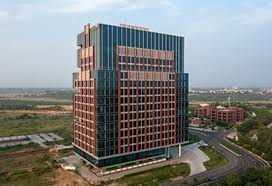
The RBI’s program boosted activity in GIFT City (Gujarat International Finance Tec-City).
The success of the banks could encourage other lenders operating from the centre to expand their wealth management operations and draw in more money from non-resident Indians (NRIs), Bloomberg reported.
Prime Minister Narendra Modi is positioning GIFT City as a zone capable of competing with established financial centres such as Singapore or Hong Kong
The centre offers exemptions from certain taxes and regulatory restrictions, boosting its appeal as an international capital raising venue. Firms including HSBC, Standard Chartered Plc and Mitsubishi UFJ Financial Group Inc. have built huge businesses in the City.
Banks received a record $127.23 billion in FCNR(B) deposits, surpassing even the most optimistic estimates. The RBI offered to take on the risk of currency-hedging costs of FCNR deposits. This prompted some lenders such as HSBC to provide loans amounting to up to 19 times the original deposit.
“Capitalising on the success of the foreign-currency non-resident accounts, we expect banks to aggressively expand wealth management and tap the global Indian diaspora through extensive international outreach,” IFSCA chairperson K Rajaraman told Bloomberg in an interview.
Banking assets in GIFT City are expected to top $150 billion by the end of September from $120 billion as of end-August, he said, adding that NRIs would be critical to the hub’s growth.
The number of depositors at banks in the zone has risen nearly 50% to about 32,000 as of the end of August from end-March, the regulator said. Three years ago, the tally was only roughly 4,000.
Rajaraman told Bloomberg that the pace at which existing retail customers are being brought on board in the hub is comparable with financial centres such as Singapore and Hong Kong and takes about two to three days. The due diligence for new customers in GIFT City typically takes 10 to 12 days, though that period is expected to shorten as know-your-customer (KYC) requirements are being streamlined.
Assisted video KYC is already available to NRIs, while unassisted face authentication via a biometric system is expected to be enabled by the end of 2026, according to Rajaraman.
GIFT City’s infrastructure now enables interbank transfers to be completed within seconds at the centre. A simplified tax regime and faster operating infrastructure are also helping the hub compete for international capital, he said.