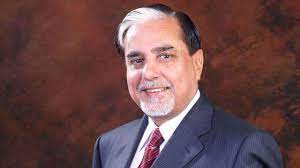
A five-member special bench of the National Company Law Tribunal (NCLT), staying the earlier Rs 6.25 crore repayment plan approval order of a smaller bench, has issued notices to all parties in the personal insolvency case of Essel Group chairman Subhash Chandra and directed him not to alienate his properties, either directly or indirectly.
The bench, headed by NCLT President Justice Anupinder Singh Grewal, said since there was no clear majority view on the proposed repayment plan among the members, including the third member, no final order could be given.
"Let notice be issued to all the parties," the NCLT said.
The bench further directed, "We also direct that the guarantor shall not alienate the properties, either directly or indirectly. Respectful submissions."
The tribunal will take up the matter for hearing.
Last week, the NCLT had approved a repayment plan under which creditors were set to recover about Rs 6.25 crore from Chandra's personal estate against claims of Rs 22,006.57 crore. This meant the creditors had to take a haircut of nearly 99.9% against their claims.
Justice Grewal explained on Tuesday that the bench was issuing the notice to understand the scope of the matter and would hear all parties, including the dissenting creditors of Chandra.
"You can address your concerns, whatever they are.
"Then we will, around the next date, take up whatever questions have come up," he added.
The case came before the five-member bench after the original two-member NCLT bench of Ashok Kumar Bhardwaj (Member, Judicial) and Reena Sinha Puri (Member, Technical) gave a split verdict on the repayment plan under the Insolvency and Bankruptcy Code, 2016 (IBC).
The case was then referred to a third member. In an order dated 25 August, the third member approved a repayment plan under which creditors would recover about Rs 6.25 crore from Chandra's personal estate.
When the matter returned to the original two-member bench, it noted that the third member had passed an independent order. Instead, they felt the attempt should have been to resolve the specific points of disagreement between the two original members.
Meanwhile, public sector lenders, which are dissenting creditors, challenged the earlier NCLT order before the National Company Law Appellate Tribunal (NCLAT).
Soon after the NCLT hearing concluded, the NCLAT took up the appeal filed by the dissenting creditors.
The appellate tribunal has now directed that the matter be listed on Wednesday, following a request for an early hearing from Solicitor General Tushar Mehta, appearing for LIC Housing Finance, Canara Bank and Union Bank, among others.
Earlier, creditors representing 80.814% of the voting share had voted in favour of the repayment plan proposed by Chandra, despite knowing that it would involve a very severe haircut.
The dissenting creditors are now alleging that at least five entities, holding 61.78% of the votes cast and backing the repayment plan, are linked to Chandra either as associates or related parties. They said that these entities – Veena Investments, Direct Media Distribution Ventures, World Crest Advisors LLP, Lemonade Capital Advisors LLP and Corpcall Capital Advisers LLP - should have been barred from voting on the repayment plan.
Chandra’s contention has been that the Rs 22,006 crore figure had been widely misunderstood because it represented claims arising from personal guarantees he had provided for loans taken by companies associated with the Essel Group, rather than money he had personally borrowed.
On 30 August, Chandra said all borrowers associated with his personal guarantees had assured him that they would settle the Rs 4,262 crore amount. After reconciling their accounts with lenders, they would settle and pay the balance.
The case has gathered significance because of the questions it raises on promoter guarantees, loan recoveries for creditors and the deepest of haircuts being offered as repayment settlement under the insolvency framework.