NEWS
Repo rate pause amid RBI concerns over rupee, inflation-growth dynamics
RBI keeps repo rate unchanged at 5.25% while revising forecast on inflation and growth for FY27; introduces measures to attract foreign capital and support rupee.



RBI keeps repo rate unchanged at 5.25% while revising forecast on inflation and growth for FY27; introduces measures to attract foreign capital and support rupee.
The Reserve Bank of India (RBI) has kept the benchmark repo rate unchanged at 5.25% and announced a slew of measures to attract foreign capital and support a weakening rupee.
The central bank also revised upwards its inflation forecast for FY27 to 5.1% while lowering the growth estimate to 6.6% amid the US-Iran war, elevated crude oil prices, global supply-chain disruptions and an expected below-normal monsoon impacted by El Nino conditions.
For propping up the rupee, the RBI’s support measures included scrapping taxes on interest income and capital gains for eligible foreign investors in government securities, offering concessional terms for foreign-currency deposits from non-resident Indians (NRIs) and subsidising hedging costs for select offshore borrowings.
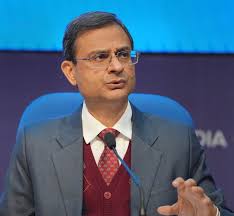
The six-member monetary policy committee (MPC), chaired by RBI Governor Sanjay Malhotra, on Friday voted unanimously to keep the policy repo rate undisturbed at 5.25% for the second consecutive time and retained its ‘neutral’ stance.
The standing deposit facility (SDF) rate was also kept unchanged at 5% and the marginal standing facility (MSF) rate and bank rate at 5.5%.
Malhotra said the global environment had deteriorated since the RBI’s last policy review in April with the ongoing conflict in West Asia casting shadows on the economic outlook. "Faced with difficult trade-offs, monetary policy has turned more cautious," he said, adding that the MPC felt it would be "prudent" to wait for greater clarity to emerge.
The governor, while announcing the policy decision on Friday, said India had entered the current phase of global turbulence with stronger macroeconomic fundamentals than during previous external shocks. Escalating geopolitical tensions, elevated commodity prices and supply disruptions were clouding the economic outlook worldwide, he pointed out.
Though underlying inflation pressures remain subdued, rising costs could spill over into wages and inflation expectations. Malhotra said the MPC saw "considerable risks" to its baseline assumptions on both growth and inflation.
GDP growth forecast for FY27 lowered
Amid global headwinds, the RBI lowered its FY27 real GDP growth forecast to 6.6% from 6.9% estimated in April.
The GDP growth is expected to be at 6.6% in Q1, 6.3% in Q2, 6.5% in Q3 and 6.8% in Q4 of FY27.
The RBI said high energy prices, weaker global demand, supply constraints and a forecast of below-normal monsoon rainfall pose risks to growth.
There was visible moderation in some sectors, as reflected in high-frequency indicators.
Inflation forecast revised upwards
Amid a spike in oil prices, an ongoing US-Iran war, a below-normal monsoon forecast and possible uptick in food prices, the RBI raised its consumer price inflation projection to 5.1% in 2026-27 from 4.6% estimated earlier in the last policy review.
Price pressures are expected to rise from 4.2% in Q1 to 5.1% in Q2 and then peak at 5.9% in Q3 before easing to 5.4% in Q4, with risks evenly balanced.
Core inflation is pegged at 4.7% in FY27, up from the earlier projection of 4.4%.
While headline inflation would remain below the RBI’s upper band target of 6%, the MPC cautioned that higher global energy prices and supply shocks could trigger broader second-round effects on wages and inflation expectations.
"CPI inflation remains below the target, despite global shock, as the pass through to domestic prices has been limited, while the baseline projections point towards headline inflation firming up towards the upper tolerance level in Q3 this year. Underlying inflation pressures continue to remain benign," Malhotra said.
Global headwinds have created uncertainties in the economic outlook in the second half of the year. "These forecasts, I may mention, are subject to upside risks due to heightened uncertainty because of a variety of reasons, namely supply chain disruptions, global commodity price shocks, uncertainty about the spatial and temporal distribution of the southwest monsoon, and risks from El Niño conditions getting developed," he said.
The last round of inflation, battled by the previous RBI Governor Shaktikanta Das, was led by the Covid-19 pandemic, the Russia-Ukraine war and global commodity shocks. It led the RBI to raise repo rate by 250 basis points between May 2022 and February 2023 to tame rising inflation.
Even the Iran war has triggered prices to rise again for three consecutive months after hitting a low of 2.74%, the RBI found space this time to press the pause button and keep repo rate untouched.
The central bank said it would remain data-dependent and closely monitor inflation risks.
Measures aimed at supporting rupee
While the government on Friday said it would scrap taxes on interest income and capital gains for eligible foreign investors in government securities from 1 April 2026, the RBI widened the universe of sovereign bonds available under its unrestricted foreign investment route.
For state-run firms raising overseas debt, the RBI also announced concessional forex swaps. It said it would bear hedging costs on fresh three-to five-year FCNR(B) deposits until 30 September 30 to attract dollar inflows from non-resident Indians (NRIs).
These measures are aimed at propping up the rupee, which has depreciated over 5% against the dollar this year due to surge in crude prices and record foreign fund outflows.
India's foreign exchange reserves stood at $682.3 billion as of 29 May, providing an import cover of about 11 months, the RBI said.