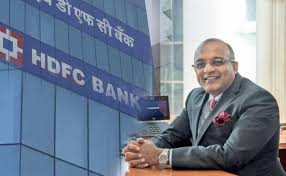
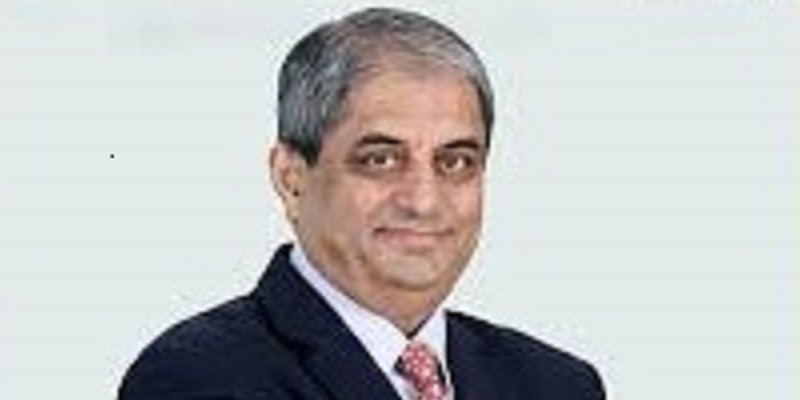
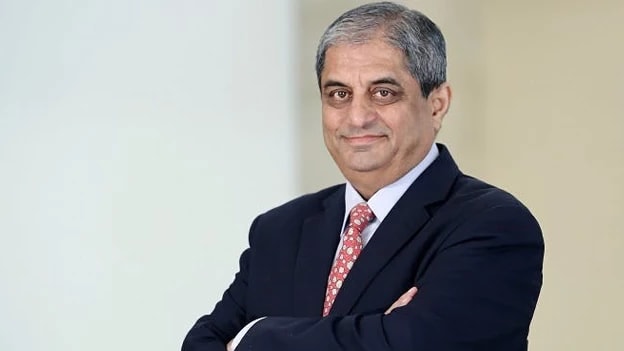
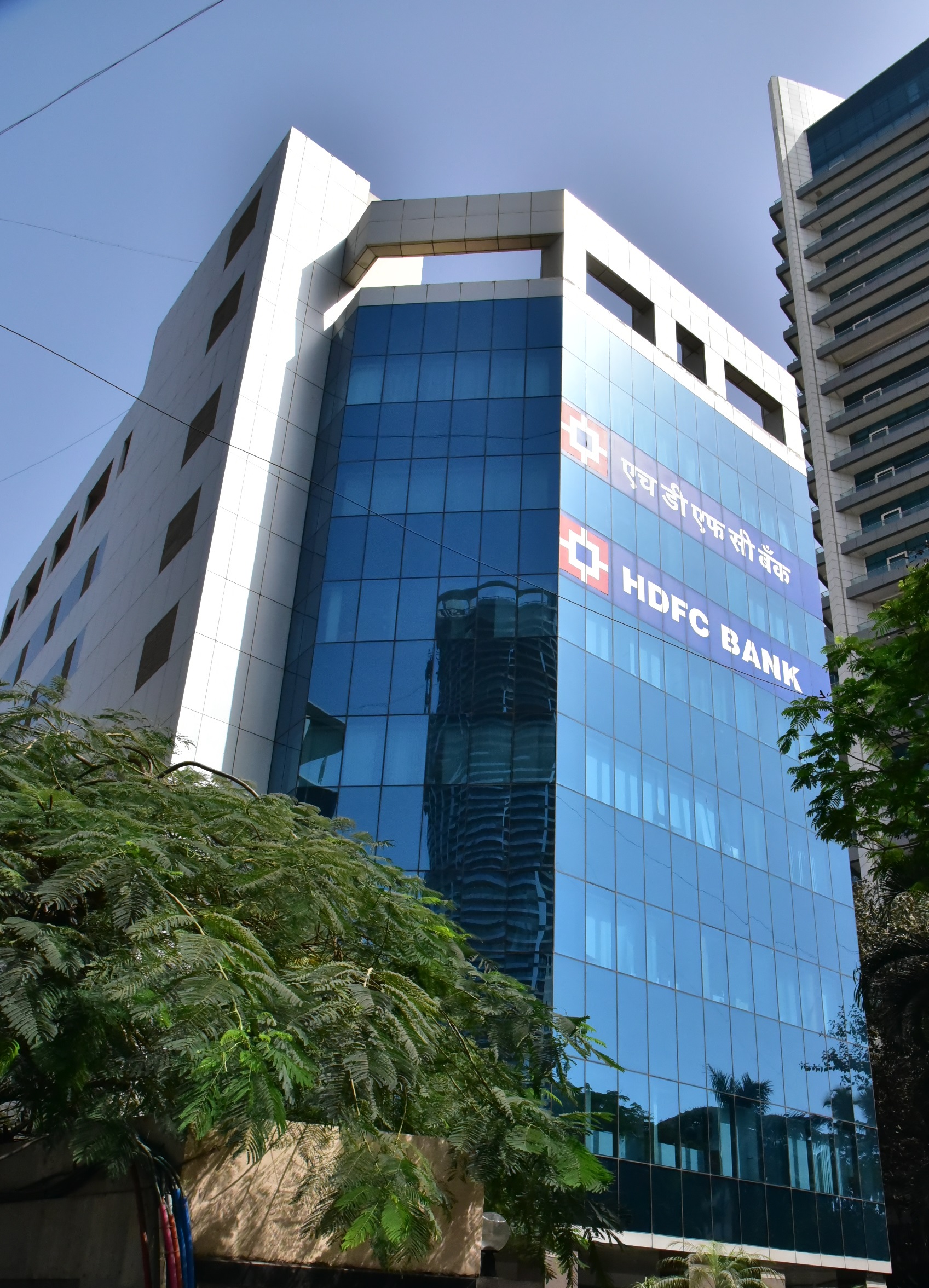
Sashidhar Jagdishan has decided not to seek reappointment as the chief executive officer and managing director of HDFC Bank, ending a six-year tenure that saw the momentous merger with mortgage giant HDFC Ltd and also brought to the open questions of governance issues in recent months.
Jagdishan, who succeeded Aditya Puri in October 2020 to lead the country’s largest private sector bank, is set to retire on 26 October.
This marks a change in stance as Jagdishan had earlier indicated that he was interested in seeking another term as MD and CEO. When part-time chairman Atanu Chakraborty abruptly resigned on 19 March citing concerns over “certain happenings and practices” within the bank over the previous two years which were not in line with his “personal values and ethics”, Jagdishan had shown the character of fighting back. He was out to demonstrate that nothing was wrong at HDFC Bank.
Sashi, as he is known to his friends and colleagues, had the support of the board and could have easily seen his name being sent to the Reserve Bank of India (RBI) for a fresh term. But despite persuasion, he reiterated to the board his decision to not seek reappointment.
The signal that he sent internally to himself as events unfolded over the last few months is: Back off.
What changed during this period? Some of the bank’s internal practices were coming under a cloud, high-net-worth investors in the Middle East were complaining of mis-selling, there were some senior-level exits and, more importantly, no corrective measure was moving the needle on the share price.
The series of steps taken since Chakraborty’s explosive resignation did little to ease investor concerns surrounding the bank. Shifting into damage-control mode, the lender immediately appointed Keki Mistry, an HDFC group veteran, as interim chairman to provide institutional continuity and credibility. It did provide stability but didn’t turn things around.
Next on 21 March, two days after the resignation of Chakraborty, the axe fell on three of the bank’s senior executives due to their alleged involvement in mis-selling of the Additional Tier-1 (AT-1) bonds of Credit Suisse. But the timing of this action diluted its credibility, suggesting a connection between what unspecific references Chakraborty made and what followed.
The fact is that the bank had commissioned an internal investigation, after non-resident Indian (NRI) investors had alleged that high-risk AT-1 bonds were aggressively marketed at the lender's Dubai branch as safe investments without providing a clear picture. And the investigation ran for over a year to conclude.
In September last year, while this issue was going on, the Dubai Financial Services Authority (DFSA) barred the bank's Dubai International Financial Centre (DIFC) branch from onboarding new clients. This was lifted after the investigation but could have temporarily caused reputational damage to the bank in the Middle East.
“The combined sequence -- a chairman's ethics-driven resignation, a DFSA regulatory ban, a detailed internal investigation, and the termination of three senior executives including the EVP of the affected geography -- represents a significant governance episode for India's largest private sector bank,” said JM Financial in a note.
HDFC Bank’s next prompt step was to commission external legal firms on 24 March to evaluate the corporate governance and ethical allegations raised by Chakraborty. The review, carried out by Wilson Sonsini Goodrich & Rosati and Wadia Ghandy & Co. over a three-month period, cleared the board and top management including Jagdishan, stating that there was no evidence to substantiate the concerns raised by the outgoing chairman.
Not many people doubted that the outcome would have been different.
After not much gap, a replacement was also found for Chakraborty. Rajiv Kumar, the former chief election commissioner of India, was appointed part-time chairman effective 15 July.
However, all this while, the HDFC Bank shares weren’t seeing any sustained or major upswing. Rather, the shares in recent months were taking a deep dive down and, on 28 August, hit a 2.5-year low of Rs 706.35. The shares, in fact, have been hovering around the Rs 720 levels or even lower - far in distance from the 52-week high of Rs 1,020.35!
Even as the market awaited news on Jagdishan’s application to the RBI for reappointment, the battle points were multiplying.
The bank’s board in its meeting on 23 July, overseen by part-time chairman Kumar, took an unusual step of issuing warning letters and imposing a penalty of Rs 1 lakh each on the lender's three top executives – Jagdishan, chief financial officer (CFO) Srinivasan Vaidyanathan and group head (Retail Assets) Arvind Vohra - for divergence from RBI direction in the Maharashtra State Road Development Corporation (MSRDC) case. The board, in the same breath, concluded the conduct as “business overreach” rather than any mala fide action, personal enrichment or improper motive.
The matter related to the bank’s audit committee initiating a formal ‘internal vigilance investigation’ into payments totalling Rs 45 crore made to the MSRDC’s deposits during FY2024 and FY2025 that were allegedly disguised as marketing expenditure. It was shown as contributions to a road-safety campaign and not as differential interest on deposits.
In another case, over 75 investors complained a few days back about mis-selling of Carlisle’s life settlement product which they bought through HDFC Bank’s Dubai operations during 2017-19. Alleging substantial losses and suspension of redemptions since late 2020 for over $13.5 million in principal investment in Carlisle’s Luxembourg Life Fund, they said they were exploring legal action against the bank. HDFC Bank, of course, has denied any mis-selling and maintained that it merely functioned as a transaction facilitator rather than the fund manager.
Are these some of the isolated compliance failures? Or are they symptomatic of deeper cultural governance issues within certain business verticals? The lender has demonstrated in its financial performance that there is no serious chain effect. But some insiders say the bank, like many others in the sector, has built elements of toxic culture while stressing on being result-oriented, and this needs to change.
A view has also been building that HDFC Bank’s share ascent to the earlier highs would be a long struggle. The lender’s market capitalisation has fallen to around Rs 11.10 lakh crore from Rs 12.99 lakh crore a day ahead of Chakraborty’s resignation. The erosion of around Rs 1.89 lakh crore is about 14.6% of the market value the bank had earlier to the exit of Chakraborty.
“HDFC Bank shares have lost approximately Rs 96,000 crore in market capitalisation over the two sessions following the chairman's exit and the firings. The market is pricing in a governance risk premium,” JM Financial wrote in its note on 22 March. Months later, that could be true even now.
Jagdishan has gone quiet in the recent days but said briefly to NDTV Profit that this is the right time for him to step down, considering that all the legacy issues have been addressed and he has completed the mandate that was set for him as the CEO.
Jagdishan's biggest mandate was to guide the $40-billion amalgamation of HDFC Ltd with HDFC Bank, which combined the size of India’s largest housing finance company with that of the largest private sector bank. He played a pivotal role in this merger and integration task, which came into effect on 1 July 2023.
On the technology front, he had to sort out digital outages soon after taking charge as the RBI froze the bank from issuance of new credit cards and carrying out Digital 2.0 initiatives. The restrictions were lifted in stages, first on credit cards in August 2021 and then on Digital 2.0 initiatives in March 2022.
How to pull the bank’s share price out of the fallen pit? How to speed up loan and deposit growth in line with the peers? How to plug in the corporate governance gaps? How to realise the promise of adding another HDFC Bank every four years? Jagdishan can’t take the blame for all of it – and won’t be around to get any of it done.
There were legacy issues and new situations that he had to manage. He had to resolve the technology issues which he inherited, weather the bank through the later waves of Covid-19, see through one of the largest corporate mergers in India, work on the integration process and recalibrate the balance sheet. This included slowing down loan growth while pursuing deposits as the merger had pushed the credit-deposit ratio to around 110%.
The end of Jagdishan’s innings marks the remarkable journey of a 31-year-old who joined the bank in 1996 as a manager in the finance function, became the chief financial officer in 2008 and expanded his functional responsibilities in areas such as legal, human resources and infrastructure after being given the unique title of ‘strategic change agent’ in 2019.
The bank's board has now fast-tracked the process for selection and appointment of Jagdishan’s successor. One of the internal names being floated for the CEO chair is deputy managing director Kaizad Bharucha. A career banker with over 35 years of experience, he joined HDFC Bank a year before Jagdishan.
The successor, whether sourced from within or outside the bank, will face several challenges. The main ones are: restoration of investor confidence, post-merger balance sheet recalibration, governance issues and driving the next stage of growth. But if there is any significant measurement yardstick, the new CEO has to ensure that the bank’s share price goes swinging up.
The reality is that HDFC Bank has entered a new phase of leadership transition. During the first phase, Puri enjoyed a god-like status inside the bank and attempted to internalise his legacy. “For 26 years he has not only been the chief executive but also the soul of the bank, shaping its brand, growth and destiny. Most of the staff see him as the presiding deity who has led the bank to be the largest in India by market capitalisation,” www.indianbankingnews.com had written on 20 October 2020, at the eve of his retirement.
Jagdishan grew under the shadows of Puri for all the years until he himself became the boss. During his stint, he largely carried out the earlier template and stayed with the bank's cultural continuity at a time when some of the internal practices and controls needed reshaping. Being full of praise for Puri and calling him as “being one in a billion”, he worked on stabilising that growth model and later powering the ‘merged’ behemoth with the stated ambition of “creating a new HDFC Bank every four years”. In the process, he was running a promoter-less bank.
Even as the bank progressed well under the personality cult of Puri and worked in almost parallel identity from its parent HDFC Ltd over the years, some deficiencies were growing along the way. The period has now come for the new head to address these and to also allow the cultures of erstwhile HDFC Ltd and the bank to fuse.