NEWS
How UPI charges will play out in new MDR framework
Six years of free ride on UPI payments is over as govt introduces 0.4% fee on transfers above Rs 2,000 made to merchants; no charge on person-to-person transactions.



Six years of free ride on UPI payments is over as govt introduces 0.4% fee on transfers above Rs 2,000 made to merchants; no charge on person-to-person transactions.
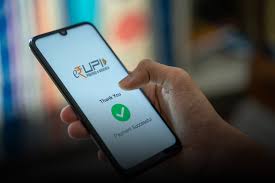
The six years of free ride on UPI payments will end next month. From 15 October, the government will introduce a 0.4% fee on transfers above Rs 2,000 made to merchants through the platform. Person-to-person (P2P) transactions and small payments, however, will continue to have no charge.
A 0.4% Merchant Discount Rate (MDR) will be levied on person-to-merchant (P2M) transactions above Rs 2,000 through UPI (Unified Payments Interface), with a maximum fee of Rs 300 for payments of Rs 75,000 and above.
What remains free of charge
All P2P UPI transfers, which account for 37% of UPI’s transaction volume and 70% of its value, will have no charges, irrespective of size.
Small-value transactions up to Rs 2,000 will also remain free. They account for more than 95% of UPI’s P2M transaction volume, according to the government.
Small merchants including street vendors receiving up to Rs 1 lakh a month via UPI QR codes under the person-to-person-merchant (P2PM) framework will continue to pay zero MDR on all transactions, with no requirement to register for GST or upgrade existing QR infrastructure.
"Customers will not be required to pay any charge when making such payments through UPI," the finance ministry said in a statement. "MDR is a charge within the merchant payment ecosystem. It is not a charge on customers making UPI payments."
Individuals will also continue to have "unlimited free usage, with no monthly quotas, volume restrictions or tiered caps on free UPI transactions", it further stated.
Flat fee of Rs 5 per transaction for essential services
The new framework provides concessional rates for essential and thin-margin sectors. Railways, telecom, insurance, fuel and agricultural inputs will attract a flat MDR of Rs 5 per transaction above Rs 2,000, instead of the standard 0.4% rate.
These categories account for nearly 17% of P2M transaction volume but around 46% of value.
The same flat-fee treatment extends to government utility bill collection (electricity, water, piped gas) and educational fee payments such as school tuition and university fees above Rs 2,000, both similarly exempted below that threshold.
Mutual funds
Payments into mutual funds, securities and through stockbrokers and dealers will attract a lighter 0.02% MDR, capped at Rs 300.
Layered fee structure
The framework has a layered structure, with different rates across categories of transactions.
On a Rs 3,000 purchase, the 0.4% MDR works out to a Rs 12 fee paid by the merchant to its acquiring bank.
A Rs 50,000 UPI payment would attract an MDR of Rs 200.
For transactions of Rs 75,000 and above, the charge will be capped at Rs 300.
How does it impact UPI payments made through credit cards
The MDR applies only to direct user-account-to-merchant-account UPI payments. Credit-linked transactions such as RuPay Credit Cards on UPI or pre-sanctioned credit lines follow separate card rules.
What about automated recurring payments
Automated recurring payments -- UPI Mandates or AutoPay used for utility bills, OTT subscriptions and recurring investments - carry no MDR at all.
P2M category
Acquiring banks will track inward payments via a velocity check, and merchants exceeding Rs 1 lakh a month for three consecutive months move into the standard P2M category. Zero MDR under this framework also extends to rural and semi-urban QR payments, an area the government has flagged as a core policy priority.
No platform fee on UPI apps
UPI apps can’t charge a platform fee on consumers. Nor will consumers have to pay any separate transaction fee.
"UPI app providers are explicitly prohibited from levying platform fees or hidden charges," the government said in a statement. "Banks have been advised to ensure that merchants do not pass MDR charges to customers for UPI payments."
No limits on free UPI transactions
There will be no monthly quotas, volume limits, or tiered caps on free UPI transactions for individuals.
Existing daily transaction limits of Rs 1-5 lakh remain purely risk-management tools rather than a backdoor charge structure.
"Daily transaction limits enforced by banks and NPCI (Rs 1-5 lakh depending on category) are purely risk-management measures, not commercial charge tiers," the government said.
Why charges are needed
The zero-MDR policy helped the UPI to grow exponentially. According to government data, the UPI platform processed over 24,162 crore transactions worth Rs 314.2 lakh crore in FY26. Last month, the network processed 2,451 crore transactions worth Rs 29.9 lakh crore.
The need to move away from a fully free system is to make the UPI ecosystem a more sustainable commercial model. Banks, payment service providers and fintech companies have no direct revenue stream from the system they built and maintained.
Evolving into the world’s largest real-time payment system, the UPI system needs continuous investments into infrastructure, cybersecurity, innovation and customer service.
The charges now collected will be distributed among the firms facilitating the transactions, including banks and app providers.
"A nominal merchant discount rate of 0.4 percent will be levied on P2M transactions above Rs 2,000. This commission will be shared amongst the payment ecosystem partners including banks and app providers," the finance ministry said.
Pressure has been building against the zero-MDR policy for years. The Payments Council of India -- whose members include Airtel Payments Bank, Amazon Pay, Google Pay, Cashfree and Jio Payments Bank -- wrote to the Prime Minister's Office seeking reconsideration of zero MDR.
Separately, banks pushed for fees on merchants with annual turnover above Rs 40 lakh. The National Payments Corporation of India (NPCI), which manages UPI and RuPay, also urged the government to revisit the policy.
RBI Governor Sanjay Malhotra, in a recent monetary policy announcement, said that "someone has to pay the cost", while stressing that the final call on MDR rests with the government rather than the central bank.
Even the Parliament's Standing Committee on Finance, in its 32nd report, warned that the zero-MDR regime "puts pressure on government finances" and limits the ecosystem's ability to invest in long-term infrastructure. It urged the need for a “viable revenue mechanism”, which “is critical to ensuring the UPI ecosystem achieves financial sustainability without perpetually straining the government exchequer".
The panel flagged that the government was providing roughly Rs 2,000 crore a year to support the incentive scheme built around the zero-MDR policy.
India’s widely used UPI platform will now have a charge on P2M transactions. According to the government data, only about 4% of merchant transactions will actually be touched by the new MDR since most fall below the Rs 2,000 threshold or qualify for the P2PM exemption.
According to Bernstein estimates, UPI could have a Rs 22,000-crore annual revenue pool by FY28 if a 40-basis-point MDR is imposed on half of the transaction value. In this monetisation opportunity, banks, as per the brokerage’s estimates, could collectively get Rs 14,000 crore, while third-party payment application providers, or TPAPs, could earn about Rs 7,000 crore.