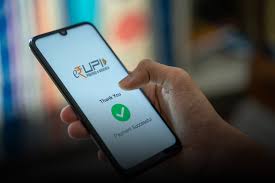
The National Payments Corporation of India (NPCI) has released a set of frequently asked questions (FAQs) to clear the air on the new UPI framework which imposes a new Merchant Discount Rate (MDR) on specified person-to-merchant (P2M) transactions above Rs 2,000.
The person-to-person (P2P) transactions continue to be free, irrespective of the amount transferred. Payments made to merchants up to Rs 2,000 will also remain free.
The revised MDR provisions will come into effect from 15 October 2026.
Here are the FAQs explaining the new UPI MDR framework.
Section 1: Policy objectives
Why is this Merchant Discount Rate (MDR) being introduced now?
UPI processes billions of transactions every month. The MDR is distributed within the UPI ecosystem to further invest into infrastructure resiliency, innovation, cybersecurity (protecting the UPI Infrastructure with banks and non-banks) and customer service.
UPI, a home-grown payment system, charges are significantly lower than other payment instruments such as credit cards, debit cards and wallets. The charges will apply only to transactions above Rs 2,000 to ensure UPI remains an affordable payment mode.
Will small-value UPI transactions be impacted?
There is no impact on small-value UPI transactions up to Rs 2,000. These transactions account for more than 95% of the total volume of UPI (P2M) transactions. The intent of levying reasonable MDR is to ensure that UPI remains accessible and convenient for everyday transactions while supporting long-term ecosystem sustainability.
What MDR is being introduced for merchants on UPI transactions?
An MDR of 0.4% will be introduced on person-to-merchant (P2M) UPI transactions above Rs 2,000. For transactions of Rs 75,000 and above, the MDR will be capped at Rs 300 per transaction.
How does UPI MDR compare to traditional debit and credit card MDRs?
UPI MDR is lower than all traditional card-based transaction fees. Standard credit card MDRs typically range from 1.5% to 2.5% per transaction, while debit card MDRs are capped up to 0.90%. By setting the baseline UPI MDR at 0.4% on transaction above Rs 2,000 and capping it at Rs 300 for high-value purchases, UPI remains the most affordable digital payment acceptance tool for commercial enterprises. This cost difference helps merchants lower their payment processing expenses while accepting digital transactions.
When do the updated MDR provisions take effect?
The finalised MDR framework and threshold structure will take effect from 15 October 2026. This timeline gives acquiring banks, payment aggregators, fintech applications and corporate accounting platforms adequate lead time to update their software and billing systems.
How does this compare with international payment systems?
Most global payment systems, including digital public infrastructures, have economic models to support infrastructure and innovation. India's approach continues to prioritise accessibility, scale and inclusion.
Who decides the ultimate implementation and enforcement of MDR caps?
The operational parameters, fee distribution models and category caps will be decided by the UPI and Services Steering Committee, headed by the National Payments Corporation of India (NPCI).
What is the dedicated fund for small merchants that is being proposed out of MDR?
A dedicated fund will be established to subsidise and accelerate digital payment infrastructure in Tier 3 to Tier 6 centres, including the northeastern states, Jammu and Kashmir and Ladakh.
In Tier 1 and Tier 2 centres, notified Central Government schemes, such as PM SVANidhi and PM Vishwakarma, may also be included. The fund will also provide financial assistance to ecosystem players for merchant onboarding and incentivise growth of UPI transactions among existing small merchants.
How does the proposed dedicated fund help small merchants?
The proposed fund will support the expansion of UPI acceptance among small merchants by providing financial assistance to acquiring banks and payment aggregators for merchant onboarding and incentives for UPI transactions originating from small merchants.
The stress will particularly be on rural areas, Tier 3 centres and beyond. This will help in increasing digital penetration and accelerate the inclusion of small businesses in the digital payments ecosystem. The detailed framework will be finalised in consultation with the Reserve Bank of India (RBI) within the next three months.
Why is reliance on government subsidies alone no longer sufficient for UPI?
Annual government incentives or subsidies were designed to support early digital adoption and provide short-term bridge funding rather than a permanent measure to compensate the payment industry's costs.
Industry estimates indicate that maintaining UPI payment operations, server bandwidth, fraud prevention systems and bank technical support costs around Rs 20,000 crore annually. A commercial, threshold-based model provides reliable capital for continuous technological innovation.
How will this move drive market competition among payment app operators?
Establishing a sustainable commercial framework encourages new fintech startups and technology companies to enter the digital payments space.
When payment processing operates under zero-MDR conditions, only well-capitalised tech conglomerates can afford to sustain long-term operational losses. A predictable commercial revenue model levels the playing field, allowing smaller, innovative startups to compete, build specialised payment software and expand financial access. Increased market competition ultimately leads to better services, improved app reliability and greater choice for consumers.
How does this policy ensure cybersecurity resilience against emerging threats?
Revenue generated through MDR can fund investments in cyber security infrastructure, AI-driven fraud detection and encryption upgrades.
How far has UPI expanded internationally as of 2026?
As of 2026, UPI’s global footprint has expanded significantly, with live payment services active across 11 foreign countries. Building a secure and self-sustaining domestic foundation strengthens India's role as a global leader in digital financial infrastructure.
What is the current UPI transaction volume and value scale and why does it need to be self-sustainable?
UPI processed 2,451 crore transactions worth Rs 29.9 lakh crore in August 2026 alone.
Handling this scale requires massive physical server infrastructure, high-speed telecommunication lines, multi-tiered cybersecurity monitoring and specialised banking software. A self-sustaining funding framework is needed to guarantee system stability.
Section 2: General consumer
Will ordinary consumers be charged for making payments via UPI?
No, consumers will continue to use UPI without transaction charges. Individual users can continue to transact free-of-cost using UPI as they have been doing till now.
The MDR policy ensures that UPI remain free and accessible for all citizens across India.
Is there any charge for UPI's person-to-person (P2P) transactions like sending money to friends, family or personal contacts?
No, P2P transactions will remain free for both the payer and beneficiary.
There will be no charges for any person transferring or receiving any amount to or from any other person (or even self-transfers) using UPI.
Users can transfer money to family members, split bills with friends or make self-transfers between their own linked bank accounts with zero transaction charges. P2P UPI transactions will remain free, irrespective of the amount transferred.
Will UPI apps start charging platform fee on UPI payments?
No, UPI app providers will not charge a platform fee or any other charge for payments made through UPI.
Will consumer prices rise at stores if merchants start paying a nominal fee?
No, market dynamics and historical payment trends show that merchants absorb nominal digital processing costs to drive higher business volume. Payment acceptance costs are considered standard operational overheads that are offset by increased footfall, higher average ticket values, and reduced cash-handling risks.
The proposed UPI MDR is also significantly lower than credit card fees and applies only above specific transaction thresholds. Shopkeepers have no economic incentive to inflate retail shelf prices. Consumers will continue paying the exact listed price for goods and services.
Will I need to pay a fee when scanning a QR code at a local vendor?
No. Consumers will not be charged for scanning a UPI QR code at local markets, street vendors or small retail shops.
The customer-facing side of the QR payment will remain free, regardless of the purchase amount. The policy has been engineered to protect daily micro-purchases like tea stalls, and local transport from any cost burden.
Are there any monthly volume caps on free UPI transactions for consumers?
No, there are no monthly quotas, volume limits or tiered caps on free UPI transactions for individual consumers. Users can make as many valid P2P and P2M payments as required without incurring transaction fees.
Standard daily security caps on aggregate transaction amounts (typically Rs 1 lakh-to 5 lakh depending on the transaction category) are imposed by banks or NPCI for security and risk management parameters. They are not commercial charge tiers.
Where can ordinary users verify official updates regarding UPI charges?
Users should refer to official updates from the Ministry of Finance, the Reserve Bank of India (RBI) and the NPCI.
Citizens should not rely on unverified social media messages and misleading reports about UPI charges. Official releases from the Press Information Bureau (PIB), RBI and NPCI should serve as the primary source of authentic regulatory policy. Users can also check verified notifications inside their primary banking applications.
Does the introduction of MDR affect auto-debit recurring payments like utility bills or OTT / Mutual Fund subscriptions?
No, automated recurring standing instructions, known as UPI Mandates or AutoPay, do not carry prescribed MDR transaction charges. This includes recurring payments for monthly utility bills, OTT subscriptions and investments.
Section 3: Micro merchants (P2PM) and small merchants
Will small local vendors (P2PM) be charged MDR on UPI payments?
No. Small merchants operating under the P2PM framework will continue to have zero MDR.
These are small vendors receiving up to Rs 1 lakh per month through UPI QR directly into their accounts. The P2PM category promotes digital payment acceptance among small merchants and businesses in the unorganised retail sector.
Additionally, small vendors operate under specialised micro-merchant account classifications (P2PM), that protect them from commercial fees. The MDR framework is specifically structured in a way that small businesses in the unorganised retail sector can accept digital payments without any margin deduction.
What is the P2PM framework and how does it protect small merchants?
The P2PM framework is a specialised account category created by NPCI to support small vendors receiving payments directly into their personal bank accounts.
Under P2PM guidelines, small merchants receiving up to Rs 1 lakh per month through UPI QR codes are eligible for mandatory zero MDR. This classification bridges informal street vendor setups and formal commercial merchant acquiring accounts, ensuring zero cost for micro-businesses. It promotes digital payment adoption across unorganised sector.
Do small merchants need to upgrade or change their existing QR codes?
No. Existing UPI QR infrastructure will continue to function normally. Merchants do not need to replace, re-register or alter their existing physical QR stands or soundboxes.
What happens if a small merchant receives a payment above Rs 2,000?
MDR applicability is determined by the merchant's account categorisation. Receiving a payment above Rs 2,000 does not impose a charge on a small merchant operating under an exempted category such as P2PM.
An MDR of 0.4% will apply on P2M UPI transactions above Rs 2,000. For transactions of Rs 75,000 and above, the MDR will be capped at Rs 300 per transaction.
When will the detailed framework for the dedicated small merchant fund be finalised?
The detailed operational framework will be finalised in consultation with the RBI within the next three months.
This collaborative exercise will determine capital allocation criteria, regional priorities and merchant incentive structures.
Stakeholder consultations will ensure the scheme addresses grass-roots distribution challenges effectively.
Is a small merchant required to register for GST to benefit from zero MDR?
No. GST registration is not required for a small merchant to qualify for zero-MDR protection under the P2PM framework.
Eligibility is determined by monthly collection thresholds (up to Rs 1 lakh per month) and bank account categorisation, regardless of GST registration status.
How will acquiring banks identify small merchants (P2PM) eligible for zero MDR?
Acquiring banks and payment service providers use transaction velocity check for merchants acquired under the P2PM category to monitor the inward transaction threshold of Rs 1 lakh per month. Merchants with inward credit of UPI payment more than Rs 1 lakh per month for three consecutive months will be transitioned to the P2M category.
Does zero MDR apply to QR code payments accepted in rural areas?
Yes. Zero MDR will apply to QR code payments accepted by eligible P2PM merchants in rural and semi-urban locations.
The framework also proposes additional support for digital payment expansion in rural areas through the proposed dedicated payment promotion fund.
Further, acquiring banks will be incentivised to expand rural deployment, ensuring that cost burden to regional shopkeepers is highly subsidised.
Section 4: Large merchants and e-commerce platforms
What MDR is applicable for large commercial transactions?
A 0.4% MDR will apply to P2M UPI transactions above Rs 2,000. For transactions of Rs 75,000 and above, the MDR will be capped at Rs 300 per transaction.
Transactions below Rs 2,000 will remain free even for established commercial entities.
Is there a maximum fee cap on very high-value UPI payments?
Yes. The maximum MDR will be capped at Rs 300 per transaction for payments of Rs 75,000 and above.
For example, a transaction of Rs 1 lakh would attract Rs 300 rather than the Rs 400 that would result from applying 0.4%.
Which specific categories qualify for a flat MDR instead of a percentage rate?
For specific merchant categories such as railways, telecom services, insurance and fuel, among others, a flat MDR of Rs 5 per transaction shall be applicable for transactions above Rs 2,000.
Instead of the standard 0.4% rate, these specified sectors will follow the flat-fee structure irrespective of the transaction amount. This model prevents cost escalations in critical public services, utility bill collection, and thin-margin sectors like fuel retail. It ensures that essential consumer services remain low-cost and digitally efficient.
Can enterprise merchants pass the MDR to buyers?
No, merchants onboarded under the framework cannot pass the MDR charge on to customers while accepting UPI payments.
The framework ensures consumers pay only the listed price for goods and services.
How is MDR calculated on exact transactions (e.g., Rs 5,000 vs Rs 1,00,000)?
MDR is calculated according to the transaction value thresholds.
For a Rs 3,000 purchase, 0.4% MDR would amount to Rs 12 paid by the merchant to its acquiring bank. For a Rs 50,000 transaction, it would be Rs 200. However, for a high-value purchase of Rs 1 lakh, the Rs 300 cap would apply because the transaction is above Rs 75,000. The 0.4% MDR would have amounted to Rs 400.
Does MDR apply to transactions made via credit cards linked on UPI or credit lines?
Credit-linked UPI payments, such as RuPay credit cards linked to UPI or pre-sanctioned bank credit lines, operate under separate credit-product rules.
Because credit-linked transactions involve short-term loans funded by issuing banks, they follow standard credit card guidelines.
The MDR discussed in this amendment apply specifically to direct users-account-to-merchant-account UPI transactions.
Section 5: Capital market transactions: Mutual Funds, Securities, Brokers and Dealers
What specific MDR rates and caps apply to Capital Market transactions via UPI?
The MDR for capital market transactions, including payments towards mutual funds, securities, stockbrokers and dealers, will be 0.02% of the transaction value, subject to a maximum capping of Rs 300.
The fee is lower than standard commercial transaction rates to encourage retail participation in formal financial markets.
Which entities and transaction types are covered under this Capital Market MDR framework?
The capital market MDR category covers regulated entities such as asset management companies, mutual funds, SEBI-registered stockbrokers, securities dealers and investment platforms.
It applies to UPI transfers for equity buying, debt market investments, mutual fund purchases and broker wallet top-ups.
By defining this category separately, it is ensured that capital market transfers are distinct from routine retail shopping or general service payments.
Section 6: Specialised sectors: Industry programme merchants
Are insurance premium payments eligible for special MDR concessions?
Yes, insurance premium payments above Rs 2,000 made through UPI will attract a flat MDR of Rs 5 per transaction instead of the standard percentage-based charge.
This concessional model ensures that policyholders making high-value annual or semi-annual insurance payments do not face heavy backend fee friction. Insurance companies benefit from low-cost digital collections, helping expand insurance coverage across India.
How does MDR work for fuel purchases at petrol pumps via UPI?
Fuel purchases above Rs 2,000 made through UPI at petrol pumps will qualify for a flat MDR of Rs 5 per transaction.
Fuel payments under Rs 2,000 will have zero MDR.
Will government utility bill collections (electricity, water) incur percentage MDR?
Public utility payments such as electricity distribution, municipal water charges and piped natural gas fall under designated Industry program category.
For utility bill payments exceeding Rs 2,000, a flat concessional MDR of Rs 5 applies, rather than a 0.4% variable rate. Utility transactions under Rs 2,000 carry zero MDR.
Are educational institutions exempt from standard MDR percentage fees?
Educational fee collections, including school tuition, university fees and institutional entrance examinations, fall under the designated Industry Programme category.
Transactions above Rs 2,000 will benefit from flat-fee structures or capped processing rates, preventing high percentage-based fees on large fee amounts.
Educational transactions up to Rs 2,000 remain completely free of MDR.