Why HDFC Bank, Kotak Mahindra Bank needed ‘Outsider’ CEOs
As external hires take over HDFC Bank and Kotak Mahindra Bank, something fundamental has altered. Era of high-profile bank chieftains is giving way to new form of process-driven leadership.



As external hires take over HDFC Bank and Kotak Mahindra Bank, something fundamental has altered. Era of high-profile bank chieftains is giving way to new form of process-driven leadership.

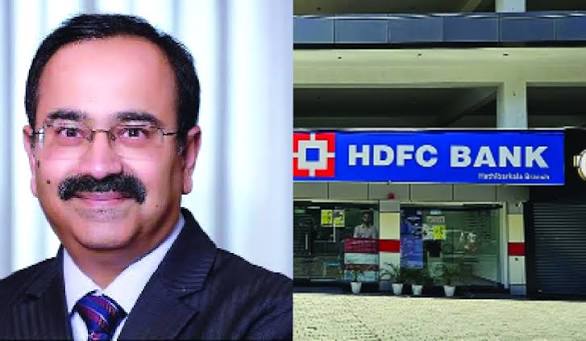
HDFC Bank and Kotak Mahindra Bank were moulded by two personality-driven leaders for decades, but have now found low-key chief executives from external organisations preferred and approved by the Reserve Bank of India (RBI).
Tapping into the CEO factory of ICICI Bank, both the lenders have found two ‘Anups’ to lead them into their next phase of growth.
Both will have their third CEOs to guide them through a critical period, with Bagchi taking charge of HDFC Bank from 27 October and Saha helming the affairs of Kotak Mahindra Bank from 1 January.
Technically, Saha’s case is an elevation to the post of managing director and CEO as he already headed retail, government business, data analytics and marketing functions at Kotak Mahindra Bank. But he is viewed as an outsider, considering that he joined the bank only nine months ago in January 2026 after spending eight years at Bajaj Finance and 14 years at ICICI Bank.
The RBI’s decision to have an external candidate as head of Kotak Mahindra Bank came even before, when Ashok Vaswani’s name was approved after founder Uday Kotak stepped down in September 2023. The bank had submitted to the RBI the names of KVS Manian and Shanti Ekambaram as well, but the two ‘insiders’ had not been selected. Manian, who served the Kotak group for 29 years, later got the RBI nod to head Federal Bank from September 2024.
Despite Uday Kotak shaping the bank and establishing it as India’s fourth-largest private sector lender, the rationale behind getting a CEO from outside the system was that the new leader would not live under the shadow of the founder and would get to exert independence in strategies and corporate governance. The processes built over 20 years between 2003 and September 2023 also required objective review and concentration of power had to be prevented.
Uday still remained on the board as non-executive director and retained an almost 26% promoter stake. The bank’s brand identity was partially intertwined with his name and he was a towering figure in the financial world. Under the circumstances, it was felt that an insider, grown and groomed under him, could unconsciously be more acceptable to legacy structures which had worked remarkably well then while a pair of ‘fresh eyes’ would challenge and put them under fair audit.
This period also witnessed a massive shift in the banking landscape. Digital banking grew exponentially, bringing technology and overhaul of IT architecture to the forefront. At Kotak Mahindra Bank, the RBI’s IT audits across 2022 and 2023 found vulnerabilities in the system and soon after Vaswani took guard, the regulator, on 24 April 2024, froze the lender’s digital onboarding of customers and issuance of credit cards due to “serious tech deficiencies” following a major outage.
A similar ban was imposed on HDFC Bank soon after the exit of Aditya Puri as MD and CEO. Following repeated technological glitches, outages and system crashes, the RBI in December 2020 halted the bank from issuance of new credit cards and launching any initiatives under its upcoming Digital 2.0 strategy.
The case for having charismatic chieftains is perhaps getting diluted in an age where banks are being increasingly technology-led. As scale and risk structures take over, processes will drive banking practices and the ecosystem will require higher levels of corporate governance.
An example of how low-profile leaders too can find their space in new-age banking is the turnaround story of ICICI Bank. Chanda Kochhar played a key role in spearheading the bank to one of the leadership positions, but had to leave under controversial circumstances in October 2018 following conflict of interest allegations regarding loans sanctioned to the Videocon Group. Sandeep Bakhshi, known to be low-profile, was given charge to lift the bank out of a bad debt crisis.
Just around that time, Yes Bank ran into deep trouble after the promoter-driven leadership style of co-founder Rana Kapoor saddled the fourth-largest private lender with governance and bad loan issues. Amid Rs 34,000 crore of non-performing loans to a few large corporates, a complete erosion of capital and a run on the bank, it faced a severe liquidity crisis. The RBI designed a rescue plan and in March 2020 the State Bank of India (SBI) and a clutch of other major lenders injected capital to bail out Yes Bank.
In case of troubled banks, the regulator has preferred external hires to elevating internal veterans. Yes Bank got Prashant Kumar, former chief financial officer of SBI, to steer the turnaround, while the RBI approved the appointment of former Indian Overseas Bank chief R Subramaniakumar as MD and CEO of RBL Bank when the private lender saw a spike in unsecured toxic loans.
When accounting lapses in the derivatives portfolio surfaced in IndusInd Bank and corporate governance issues were raised, Rajiv Anand, former deputy MD of Axis Bank, was brought in last year to clean up the mess and rebuild a new top-management team.
As regards HDFC Bank and Kotak Mahindra Bank, the concerns have been less of system failures than of lifting them out of the shadows of their overarching first CEOs. The aim is to merge their professional leadership with de-centralised and independent practices which are more process driven.
Like Kotak Mahindra Bank, HDFC Bank had a successor overhang issue after the Puri-cult image ran through the organisation from its inception in September 1994 until he hung up his boots in October 2020. As it climbed quickly to the top rank among private sector banks in India, the leadership style remained unchallenged. Even a month before his exit, Sashidhar Jagdishan, who would be the next CEO, gave a monthlong farewell that heavily marketed Puri’s stature to internalise his legacy at HDFC Bank through a team called ‘Karamchand Gang’.
However, the ‘outsider-CEO’ line of thought was not followed in HDFC Bank immediately after Puri’s exit. This was probably because of two reasons. First, the bank was planning a mega-merger with HDFC Ltd to create a $40 billion behemoth; it needed an ‘insider-leader’ to guide through the deal. Secondly, the bank had grown too big (was designated as a ‘domestic systemically important bank’ since 2017) and it wasn’t the right time to risk it with an external hired talent.
After the era which saw high-profile bank captains, a new style of leadership is evolving. V Vaidyanathan, a veteran from the golden era, represents this leadership transition with his heavy focus on building IDFC First Bank as a retail-driven, customer-first, digital-first new-age bank.
As new leaders take over HDFC Bank and Kotak Mahindra Bank, something fundamental within the ecosystem has permanently altered.